For passionate home cooks, the kitchen can feel like a sanctuary, a place where culinary magic unfolds. But for those living in elevated regions, this magic often comes with an unexpected challenge: high altitude cooking. If you’ve ever found your recipes failing or taking significantly longer to cook in a pressure cooker despite its reputation for speed, you’re not alone. The science behind it is fascinating, and understanding it is the first step to mastering high altitude pressure cooking.
The Science of Atmospheric Pressure and Boiling Points
The primary reason high altitude impacts your cooking lies in atmospheric pressure. At sea level, the air above us exerts a certain amount of pressure—around 14.7 pounds per square inch (psi). As you ascend to higher elevations, the blanket of air above thins, reducing this atmospheric pressure. For instance, at 5,000 feet, the pressure drops to about 12.3 psi, and at 10,000 feet, it’s only about 10.2 psi.
This decrease in atmospheric pressure directly affects the boiling point of water. At sea level, water boils at 212°F (100°C). However, for every 500-foot increase in elevation, water’s boiling point decreases by nearly 1°F. This means at 7,500 feet, water boils at approximately 198°F (92°C), and at even higher altitudes, it boils at even lower temperatures. While it might seem like boiling faster means cooking faster, the opposite is true. Food cooks based on the temperature it reaches and maintains, and a lower boiling point means your food is cooking at a significantly lower temperature. Certain chemical reactions necessary for food to cook properly, like the gelatinization of starches in potatoes or the softening of dried beans, require higher temperatures. If the boiling point is too low, these foods might never fully cook, no matter how long they simmer.
The Pressure Cooker Advantage at Elevation
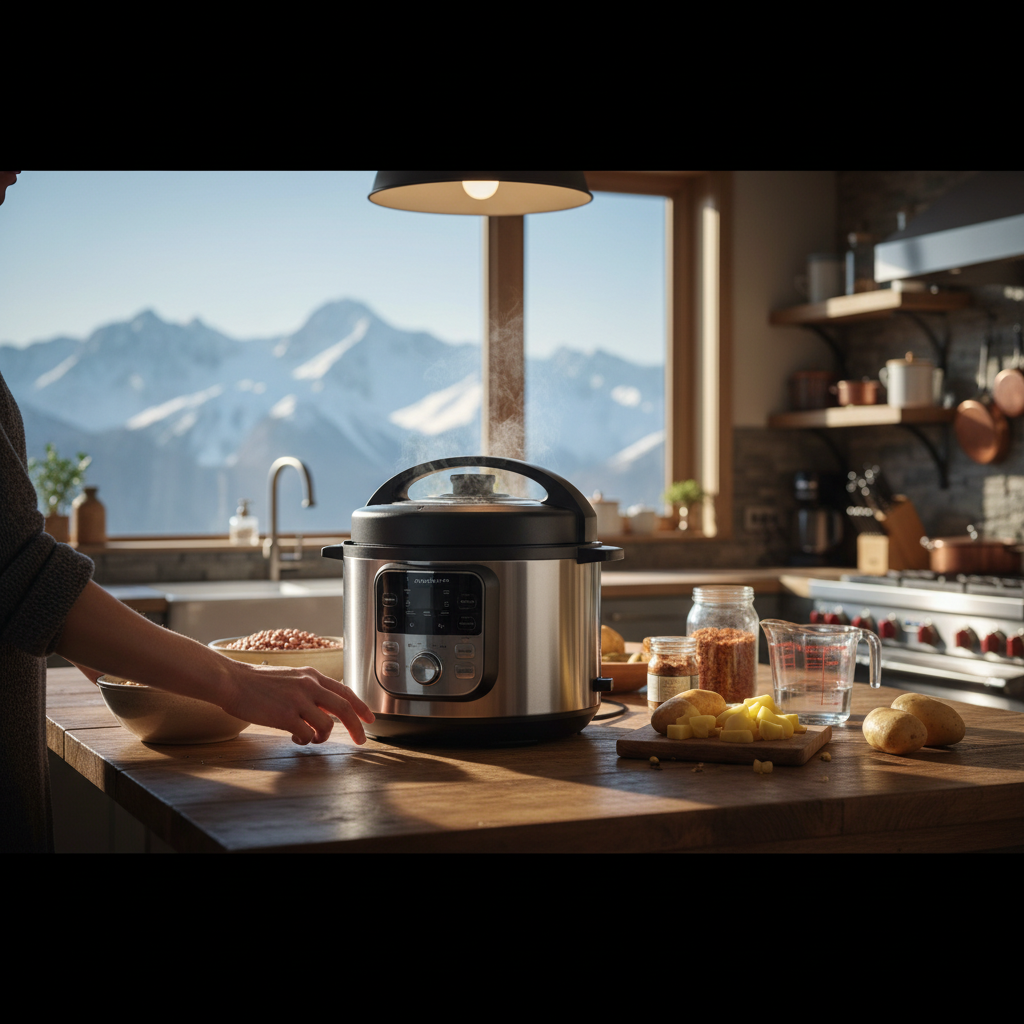
This is where your pressure cooker becomes an invaluable tool. A pressure cooker works by creating a sealed environment that traps steam, which then builds up pressure inside the pot. This increased internal pressure, which is significantly higher than the ambient atmospheric pressure outside the pot, effectively raises the boiling point of the water within. By elevating the boiling point, a pressure cooker allows your food to cook at temperatures comparable to or even higher than those achieved at sea level, dramatically reducing cooking times and ensuring consistent results.
While a pressure cooker helps counteract the effects of high altitude by increasing the internal cooking temperature, it’s important to understand that the absolute pressure inside the cooker is still relative to the external atmospheric pressure. This means that even with a pressure cooker, the effective cooking temperature at high altitude might still be slightly lower than at sea level. Therefore, adjustments are often necessary to achieve perfect results.
Adjusting Your Pressure Cooking for High Altitude
Successful pressure cooking at high altitudes requires a few straightforward adjustments to your standard recipes. These modifications compensate for the lower ambient pressure and boiling point.
Increasing Cooking Times
|
Our Picks for the Best Electric pressure cooker in 2026
As an Amazon Associate I earn from qualifying purchases.
|
||
| Num | Product | Action |
|---|---|---|
| 1 | Instant Pot Duo 7-in-1 Mini Electric Pressure Cooker, Slow Rice Cooker, Steamer, Sauté, Yogurt Maker, Warmer & Sterilizer, Includes Free App with over 1900 Recipes, Stainless Steel, 3 Quart |

|
| 2 | Sweetcrispy 16-in-1 Electric Pressure Cooker 6QT, 12-Preset Multi Cookers with Ceramic Pot, Slow Cook Rice Steamer Sauté Soup Yogurt Maker and More, Recipe Book |
|
| 3 | DUMOS 16-in-1 Electric Pressure Cooker, 6QT Programmable Multi Cooker with 12 One-Touch Presets, Soup Steam Yogurt and More, Ceramic Inner Pot Delay Start & Keep Warm, Includes Recipe Guide, Black |
|
| 4 | Instant Pot Duo 7-in-1 Electric Pressure Cooker, Slow Cooker, Rice Cooker, Steamer, Sauté, Yogurt Maker, Warmer & Sterilizer, Includes App with Over 800 Recipes, Stainless Steel, 8 Quart |
|
| 5 | NEWBULIG 16-in-1 Electric Pressure Cooker, 6QT Multi Cooker with 12 Presets, Slow Cook Rice Steamer Sauté Soup Meat Stew Canning Yogurt Maker, Ceramic Inner Pot & Recipe Book Included, Silver |
|
| 6 | Instant Pot Duo 7-in-1 Electric Pressure Cooker, Slow Cooker, Rice, Steamer, Sauté, Yogurt Maker, Warmer & Sterilizer, Includes App With Over 800 Recipes, Stainless Steel, 6 Quart |
|
| 7 | COSORI Pressure Cooker 6QT, Stainless Steel, 9-in-1 Multi Cooker, 12 Safety Features, Ceramic Inner Pot, Rice, Slow Cook, Sous Vide, Saute, 1100W |
|
| 8 | Ninja HyperHeat 9-in-1 6.5-qt Pressure Cooker | Steams, Slow Cooks, Sears, Sautés, Sous Vide, Yogurt & More | With SimpliServe Pot | Powerful 1200-Watt | Blue Macaron | PC201 |
|
| 9 | Midea 12-in-1 Electric Pressure Cooker, 8 Quarts, 12 Presets, Multi-Functional Programmable Slow Cooker, Rice Cooker, Steamer, Sauté Pan, Yogurt Maker, and More, Stainless Steel |
|
| 10 | Sweetcrispy 16-in-1 Electric Pressure Cooker 6QT, 12-Preset Multi Cookers with Ceramic Pot, Slow Cook Rice Steamer Sauté Soup Yogurt Maker and More, Recipe Book |
|
The most common adjustment is to increase the cooking time. A widely accepted rule of thumb suggests increasing cooking time by 5% for every 1,000 feet above 2,000 feet elevation. So, if you live at 6,000 feet above sea level, you would calculate the adjustment for 4,000 feet (6,000 – 2,000 = 4,000). This would mean a 20% increase in cooking time (4 x 5%). If a recipe calls for 25 minutes at sea level, you would cook it for 30 minutes at 6,000 feet. This extra time ensures that foods reach their optimal tenderness and doneness despite the slightly lower effective cooking temperature.
Adding Extra Liquid
The drier air and faster evaporation rates at higher altitudes mean that moisture can escape your ingredients more quickly, even within a sealed pressure cooker. To combat this, you might need to add a slight increase in liquid, typically 2-4 tablespoons, especially for recipes involving dry beans or rice. This extra liquid helps ensure sufficient moisture for proper hydration and prevents scorching.
Considering Natural Pressure Release (NPR)
For certain foods, particularly dry beans and grains, allowing for an extra 5-10 minutes of natural pressure release (NPR) can be beneficial. Natural release allows the pressure to drop gradually, giving the food more time to absorb moisture and finish cooking gently. It also reduces the risk of liquid or food erupting from the vent, which can happen with quick release methods when the internal pressure difference is too great.
Specific Foods That Need More Attention
While most recipes can be adjusted with the time increase rule, certain foods are more sensitive to high altitude conditions:
- Dry Beans and Legumes: These often require longer cooking times and more liquid to soften properly.
- Whole Grains: Similar to beans, grains like brown rice or farro may need extended cooking.
- Tough Cuts of Meat: While pressure cooking significantly tenderizes meat, at higher altitudes, very tough cuts might benefit from slightly longer cooking to become fork-tender.
High Altitude Pressure Cooking Tips for Success
Mastering pressure cooking at high altitudes is an ongoing learning process. Here are some tips to help you achieve consistent culinary triumphs:
- Trust Your Thermometer: For meats, poultry, and eggs, always use a food thermometer to ensure they reach safe internal temperatures. This is crucial for food safety, especially when adjusting cooking times.
- Keep a Cooking Journal: Document your adjustments for different recipes and altitudes. Note down the original cooking time, your altitude, the adjustments made, and the final results. This log will become an invaluable resource for future cooking endeavors.
- Understand Your Cooker: Be aware of the differences between stovetop and electric pressure cookers. Stovetop models generally operate at higher pressures (around 15 psi) compared to most electric models (10-12 psi). Some advanced electric pressure cookers feature automatic altitude adjustments or manual pressure settings, which can simplify the process.
- Patience is Key: While pressure cooking is fast, adapting to high altitude might require a bit more patience and experimentation. Don’t be discouraged by initial failures; each attempt is a learning opportunity.
“High altitude cooking is as much an art as it is a science. Understanding the principles is just the beginning; the real mastery comes with hands-on experience and a willingness to adapt.”
Conclusion
High altitude presents a unique set of challenges for any cook, fundamentally altering how water behaves and, consequently, how food cooks. Pressure cookers offer a powerful solution by artificially elevating the boiling point, allowing you to bypass many of these obstacles. By understanding the impact of lower atmospheric pressure and applying simple adjustments like increasing cooking times, adding a little extra liquid, and utilizing natural pressure release, you can continue to enjoy the benefits of fast, efficient, and perfectly cooked meals in your pressure cooker, no matter how high you are.
Are you ready to embrace the challenge and elevate your high-altitude pressure cooking skills?
Frequently Asked Questions
How much additional cooking time is needed for pressure cooking at high altitudes?
Generally, you should increase the cooking time by 5% for every 1,000 feet above 2,000 feet elevation. For example, at 4,000 feet, you would add 10% to the cooking time, and at 6,000 feet, you would add 20%.
Why does water boil at a lower temperature at high altitudes?
Water boils when its vapor pressure equals the surrounding atmospheric pressure. At higher altitudes, atmospheric pressure is lower due to less air above, so water requires less energy (a lower temperature) to reach its boiling point.
Do I need to add more liquid when pressure cooking at high altitude?
Yes, a slight increase of 2-4 tablespoons of liquid is often recommended, especially for ingredients like dry beans and rice. This helps compensate for faster evaporation rates in the drier high-altitude air and ensures proper hydration of your food.
Can electric pressure cookers automatically adjust for high altitude?
Some advanced electric pressure cooker models may offer an “altitude adjustment” feature that automatically increases cooking time. However, many standard models do not, requiring manual adjustments to cooking times and liquid as a general guideline.
What happens if I don’t adjust my pressure cooking for high altitude?
If you don’t adjust for high altitude, your food may be undercooked, tough, or dry. Foods like beans might remain hard, and meat might not tenderize properly, as the lower effective cooking temperature isn’t sufficient for the necessary chemical changes to occur within the standard cooking time.