Electric pressure cookers have revolutionized home cooking, offering speed and convenience for countless dishes. Yet, harnessing their full potential hinges on understanding a critical final step: releasing the internal pressure. The method you choose—Natural Release (NR) or Quick Release (QR)—isn’t just a matter of timing; it profoundly impacts your food’s texture, flavor, and overall safety. Navigating these options can seem daunting, but once mastered, it unlocks a new level of culinary precision, ensuring every meal from tender roasts to perfectly crisp vegetables is a success.
The Science Behind Pressure Release
Inside your electric pressure cooker, liquids reach temperatures far exceeding the normal boiling point due to the sealed, high-pressure environment. This elevated temperature accelerates cooking times dramatically. Once the cooking cycle is complete, this intense pressure must be safely and appropriately managed to prevent sudden decompression, which can damage food and pose a safety risk. A small metal pin, often called a float valve, rises when pressure builds and drops when it’s safe to open the lid, serving as your primary visual safety indicator.
Natural Pressure Release (NPR/NR): The Gentle Approach
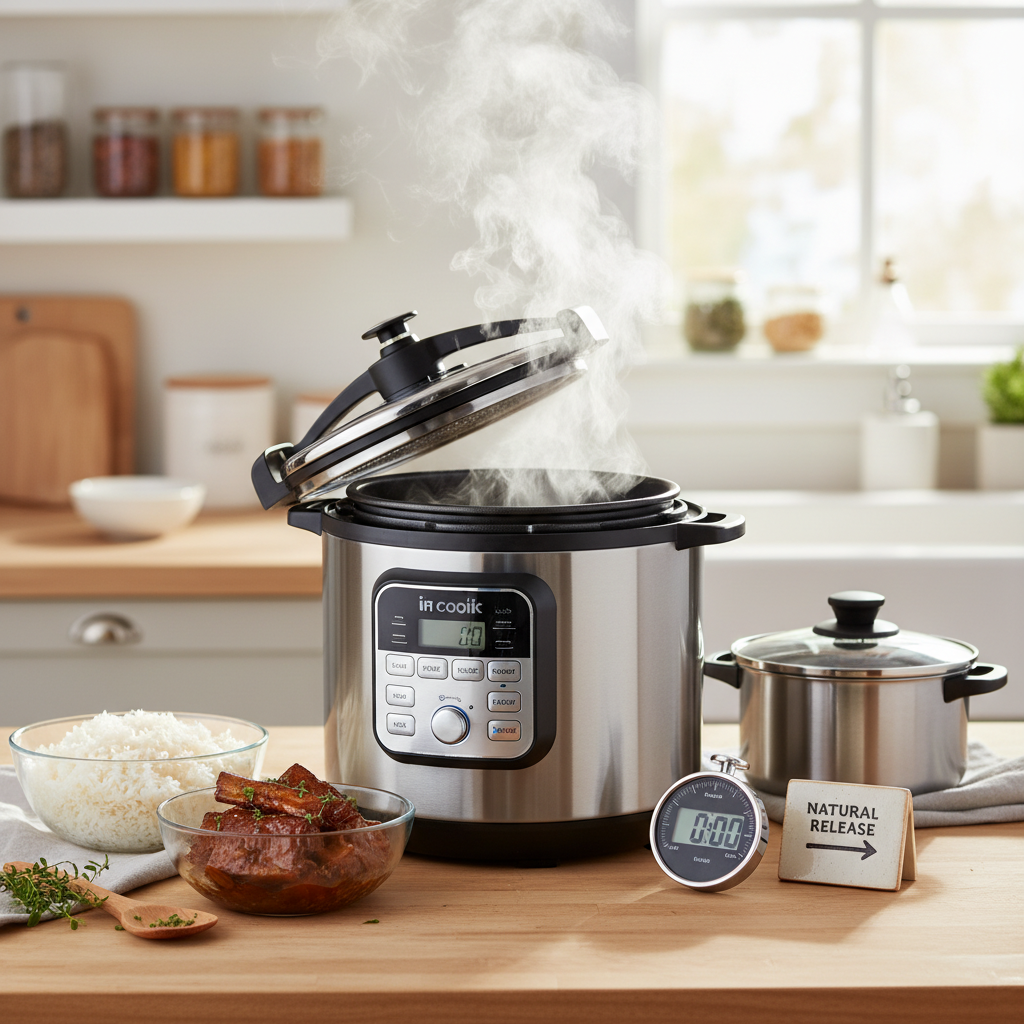
Natural Pressure Release (NPR or NR) is the most passive method, allowing the pressure within your electric pressure cooker to dissipate gradually on its own. Once the cooking cycle ends, you simply leave the steam release valve in the “Sealing” position. The cooker slowly cools down, and as the temperature and pressure decrease, the float valve will eventually drop.
This method is akin to letting a traditionally cooked roast rest after coming out of the oven, allowing the juices to redistribute and the internal cooking process to gently conclude. For foods like large cuts of meat, NR promotes exceptional tenderness by preventing the fibers from seizing up suddenly. Grains and dried beans also benefit significantly from NR, ensuring they fully hydrate and achieve a desirable texture without becoming mushy. Moreover, for high-liquid or foamy dishes such as soups, stews, chili, or pasta, NR is crucial for preventing a messy “foam explosion” from the steam valve. The time it takes for a full natural release can vary widely, from 5 to over 60 minutes, depending on the volume of food and liquid in the pot. To slightly accelerate the process, you can turn off the “Keep Warm” function once the cooking time is up.
Quick Pressure Release (QPR/QR): The Fast Lane
Quick Pressure Release (QPR or QR) offers an immediate halt to the cooking process. As soon as the cooking cycle concludes, you manually open the steam release valve, typically by turning it from “Sealing” to “Venting” or pressing a dedicated release button, depending on your model. This action rapidly vents the steam, causing the float valve to drop quickly.
QR is your go-to method when precision cooking is paramount, particularly for delicate ingredients that can easily overcook. Vegetables like broccoli, asparagus, or green beans retain their vibrant color and crisp-tender texture, avoiding the mushiness that prolonged exposure to heat can cause. Fish and seafood also benefit from a quick release, ensuring they remain succulent and flaky without drying out. While efficient, QR requires caution; a powerful jet of hot steam will erupt from the valve, and it can also cause frothy or fatty liquids to spew, creating a mess. Always be mindful of your surroundings and personal safety when performing a quick release.
The Hybrid Method: Delayed Quick Release
Sometimes, the best approach is a compromise. The Delayed Quick Release, also known as a Partial Natural Release, combines aspects of both methods. With this technique, you allow the pressure cooker to naturally release pressure for a predetermined period (often 5, 10, or 15 minutes, as specified by a recipe), and then you perform a quick release of any remaining pressure.
This hybrid method strikes an ideal balance, allowing certain foods a brief “resting” period while still speeding up the overall process compared to a full natural release. It’s particularly useful for recipes that benefit from a gentle cool-down but don’t require the extensive time of a complete natural release, or to allow initial foaming in liquids to subside before safely venting the remaining steam. This controlled approach offers flexibility and can enhance the texture and finish of many dishes.
Choosing Your Release Method: A Practical Guide
Selecting the appropriate pressure release method is vital for culinary success. The table below provides a practical overview of when to use each method, ensuring optimal results for your meals.
| Food Type | Recommended Release Method | Why |
|---|---|---|
| Large Cuts of Meat | Natural Release (NR) | Promotes tenderness and prevents drying. |
| Grains (Rice, Dried Beans) | Natural Release (NR) | Ensures full hydration and proper texture. |
| Soups, Chili, Foamy Liquids | Natural Release (NR) / Delayed QR | Prevents spewing and mess. |
| Delicate Vegetables | Quick Release (QR) | Stops cooking immediately to prevent overcooking/mushiness. |
| Fish & Seafood | Quick Release (QR) | Prevents overcooking. |
| Poultry | Quick Release (QR) / Delayed QR | Can be quick released, but a short delayed release might be beneficial for larger pieces. |
Always remember that most recipes will explicitly state the recommended release method. When in doubt, defer to the recipe’s instructions to achieve the intended outcome.
Essential Safety Practices During Pressure Release
While modern electric pressure cookers are designed with multiple safety features, adherence to best practices during pressure release is paramount for safe operation.
First and foremost, always read and understand your appliance’s manual; each model may have specific instructions. During any release, keep your hands and face well clear of the steam vent to avoid painful burns from the hot, concentrated steam. Similarly, avoid releasing steam directly under kitchen cabinets, as the moisture can cause damage over time. Never, under any circumstances, attempt to force the lid open if the float valve is still in the raised position. This indicates that pressure remains inside, and forcing it could lead to injury. Regularly ensure the steam release valve is clear of any food debris or blockages, as this can impede proper pressure regulation. Finally, when operating the steam release valve, especially for quick release, consider using oven mitts or a long-handled utensil to protect your hands from direct contact with the steam.
Conclusion
Understanding the nuances of Natural Release and Quick Release is fundamental to mastering your electric pressure cooker. Each method offers distinct advantages, catering to different food types and desired culinary outcomes. Whether you’re aiming for fall-off-the-bone tenderness in meats with a natural release, or crisp-tender vegetables achieved through a quick release, choosing wisely ensures perfect results every time. Beyond culinary excellence, prioritizing safety during this crucial step is non-negotiable. By adhering to best practices and respecting the power of steam, you can confidently explore the vast world of pressure cooking. What culinary masterpiece will you create next, now that you’re a pressure release expert?
Frequently Asked Questions (FAQ)
How long does Natural Release typically take?
|
Our Picks for the Best Electric pressure cooker in 2026
As an Amazon Associate I earn from qualifying purchases.
|
||
| Num | Product | Action |
|---|---|---|
| 1 | Instant Pot Duo 7-in-1 Mini Electric Pressure Cooker, Slow Rice Cooker, Steamer, Sauté, Yogurt Maker, Warmer & Sterilizer, Includes Free App with over 1900 Recipes, Stainless Steel, 3 Quart |

|
| 2 | Ninja HyperHeat 9-in-1 6.5-qt Pressure Cooker | Steams, Slow Cooks, Sears, Sautés, Sous Vide, Yogurt & More | With SimpliServe Pot | Powerful 1200-Watt | Blue Macaron | PC201 |
|
| 3 | DUMOS 16-in-1 Electric Pressure Cooker, 6QT Programmable Multi Cooker with 12 One-Touch Presets, Soup Steam Yogurt and More, Ceramic Inner Pot Delay Start & Keep Warm, Includes Recipe Guide, Black |
|
| 4 | Instant Pot Duo 7-in-1 Electric Pressure Cooker, Slow Cooker, Rice, Steamer, Sauté, Yogurt Maker, Warmer & Sterilizer, Includes App With Over 800 Recipes, Stainless Steel, 6 Quart |
|
| 5 | Instant Pot Duo 7-in-1 Electric Pressure Cooker, Slow Cooker, Rice Cooker, Steamer, Sauté, Yogurt Maker, Warmer & Sterilizer, Includes App with Over 800 Recipes, Stainless Steel, 8 Quart |
|
| 6 | COSORI Pressure Cooker 6QT, Stainless Steel, 9-in-1 Multi Cooker, 12 Safety Features, Ceramic Inner Pot, Rice, Slow Cook, Sous Vide, Saute, 1100W |
|
| 7 | NEWBULIG 16-in-1 Electric Pressure Cooker, 6QT Multi Cooker with 12 Presets, Slow Cook Rice Steamer Sauté Soup Meat Stew Canning Yogurt Maker, Ceramic Inner Pot & Recipe Book Included, Silver |
|
| 8 | Midea 12-in-1 Electric Pressure Cooker, 8 Quarts, 12 Presets, Multi-Functional Programmable Slow Cooker, Rice Cooker, Steamer, Sauté Pan, Yogurt Maker, and More, Stainless Steel |
|
| 9 | Sweetcrispy 16-in-1 Electric Pressure Cooker 6QT, 12-Preset Multi Cookers with Ceramic Pot, Slow Cook Rice Steamer Sauté Soup Yogurt Maker and More, Recipe Book |
|
| 10 | Sweetcrispy 16-in-1 Electric Pressure Cooker 6QT, 12-Preset Multi Cookers with Ceramic Pot, Slow Cook Rice Steamer Sauté Soup Yogurt Maker and More, Recipe Book |
|
Natural Release time varies significantly, generally ranging from 5 to 60 minutes. Factors like the volume of food, the amount of liquid, and the density of ingredients all influence how quickly the pressure dissipates. Turning off the “Keep Warm” function can help speed up the process.
Can I use Quick Release for all recipes?
While Quick Release is fast and convenient, it is not suitable for all recipes. It’s best avoided with foods prone to foaming (like oats, soups, or starchy items) as it can cause splattering. It can also dry out or toughen certain meats due to the rapid temperature drop, so always check the recipe or food type.
What should I do if food splatters during Quick Release?
If food splatters during a Quick Release, immediately turn the steam release valve back to the “Sealing” position. Wait a few minutes to allow some natural pressure release, then try again, perhaps performing a more controlled, intermittent release by quickly opening and closing the valve until the pressure is fully vented.
Is it safe to leave my electric pressure cooker unattended during Natural Release?
Yes, it is generally safe to leave your electric pressure cooker unattended during a Natural Release. Modern electric pressure cookers have safety mechanisms that prevent the lid from opening until the pressure has fully dissipated. However, it’s always wise to ensure the appliance is on a stable surface and not near edges where it could be knocked over.
What is the difference between Natural Release and “10-minute Natural Release”?
A “Natural Release” means allowing the cooker to de-pressurize completely on its own until the float valve drops. A “10-minute Natural Release” is a specific hybrid method where you wait for 10 minutes after the cooking time ends, allowing some pressure to naturally dissipate, and then you manually quick release any remaining pressure. This combines some benefits of natural release with a quicker overall process.